
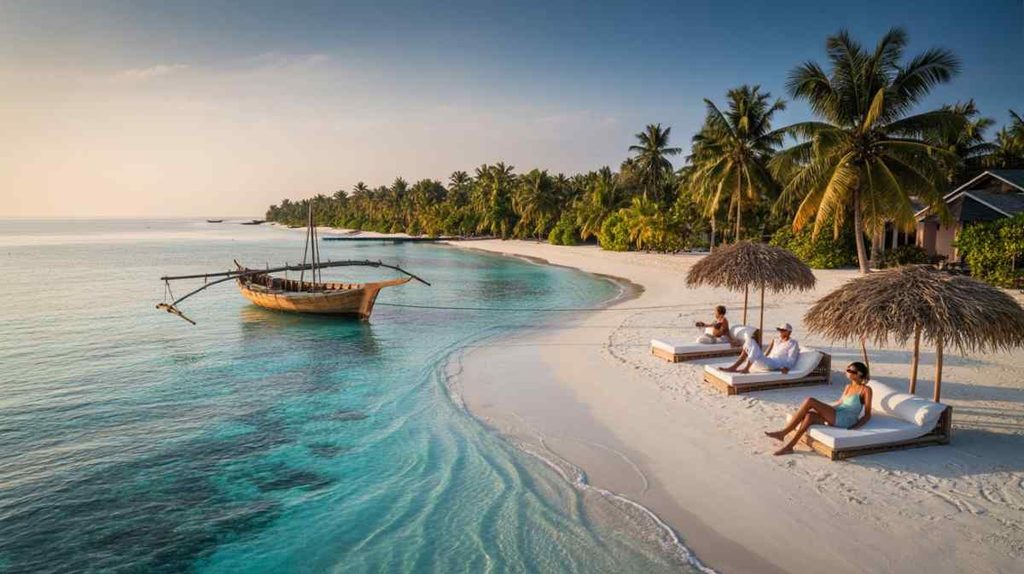
Zanzibar welcomed 124,481 visitors in August 2026, putting the Indian Ocean destination firmly into one of its strongest late-summer periods as international demand continued to build. The August total was higher than the 105,506 visitors recorded during the same month in 2025 and also exceeded the 107,801 arrivals registered in July 2026.
Italy remained the leading international source market, continuing a pattern already visible in Tanzania’s official tourism data. The latest Tanzania Tourism Sector Survey identifies Italy as Zanzibar’s largest long-haul source market, accounting for 21.6 per cent in 2025, ahead of France at 12.2 per cent and the United Kingdom at 8.9 per cent.
The August performance gives Zanzibar a particularly strong position among Indian Ocean destinations competing for European holidaymakers seeking beaches, warm weather, marine activities and cultural experiences.
Italy Holds a Strong Position in Zanzibar Travel
Italian visitors have a long-established connection with Zanzibar, and the market remains particularly important for the island’s leisure economy.
The appeal is easy to see in the way a Zanzibar holiday can be built around different experiences without requiring visitors to leave the island. A stay can begin among the narrow streets and historic buildings of Stone Town before moving north toward Nungwi or Kendwa, where beach resorts, diving and sunset cruises dominate the travel experience.
On the southeast coast, Paje has developed a very different atmosphere, with a long beach, water sports and kitesurfing forming a major part of the visitor offer. Kizimkazi, farther south, provides opportunities for marine experiences and connections with Zanzibar’s coastal communities.
The Italian market therefore fits naturally into a destination offering both traditional resort holidays and more active itineraries.
European Demand Extends Beyond Italy
Italy’s leading position does not mean Zanzibar’s European market is concentrated in one country.
France and the United Kingdom followed Italy among the leading long-haul source markets in the latest official sector survey, while Germany, the Netherlands, Spain, Poland, Austria, Belgium and Greece also appeared among Zanzibar’s principal markets.
That broad European base gives Zanzibar several streams of demand rather than dependence on a single international market.
For travellers, the island offers a combination that works across different holiday styles. Couples can focus on beach resorts and marine excursions, families can combine coastal stays with cultural visits, while adventure-oriented visitors can choose diving, snorkelling, kitesurfing, fishing and boat trips.
Stone Town Keeps the Cultural Side of Zanzibar Visible
The beach resorts remain the strongest image associated with Zanzibar, but Stone Town continues to provide the cultural centre of the visitor experience.
The UNESCO-listed historic area offers a completely different setting from the resort beaches. Narrow streets, carved wooden doors, old merchant houses, markets and waterfront views give visitors a glimpse of Zanzibar’s Swahili, Arab, Indian and European influences.
A growing arrival figure therefore does not only translate into demand for beachfront accommodation. It also feeds restaurants, guides, cultural attractions, transport providers, markets and excursions in and around Stone Town.
Travellers arriving for a longer stay can combine the historic quarter with northern beaches or head south for marine experiences, creating an itinerary that moves between urban heritage and tropical coastline.
Kizimkazi Adds a Fresh Cultural and Marine Dimension
August also brought attention to Kizimkazi through the 2026 Kizimkazi Festival. The official Tanzania tourism website listed the festival for August 12 and described it as an event centred on coastal culture, community traditions, marine heritage and island experiences.
The event was also highlighted by Zanzibar’s government. The President’s Office reported that the festival ran from August 12 to August 14 and described it as a platform for promoting tourism, culture, investment opportunities, talent and new markets for businesses and entrepreneurs.
For visitors, Kizimkazi provides another reason to look beyond the main resort areas. The southern coastline combines village life, marine activities and cultural experiences with a quieter setting than some of Zanzibar’s busier northern beach zones.
Air Access Supports the Visitor Experience
Zanzibar’s tourism growth also depends heavily on international air connectivity. The Zanzibar Airports Authority describes the island’s airports as serving more than 30 international airlines, while its 2026 news updates have highlighted new and returning international connections.
For European visitors, direct or convenient connecting services can make the difference between Zanzibar being considered for a short beach break and becoming part of a longer Tanzania itinerary.
The island increasingly works as both a standalone destination and the beach component of a wider Tanzania journey. Visitors can spend several days on Zanzibar before or after a mainland safari, combining Serengeti, Ngorongoro or other wildlife destinations with Indian Ocean beaches.
Longer Stays Give Zanzibar More Tourism Depth
The latest visitor figures are significant not only because more people are arriving but because Zanzibar offers enough experiences to keep them moving across the island.
A traveller can start in Stone Town, continue to Nungwi, explore the waters around Mnemba, spend time at Paje, visit Kizimkazi and return through the island’s rural interior. Spice farms, diving centres, fishing villages, restaurants, cultural sites and beaches all contribute to a travel experience that extends well beyond the resort.
The August 2026 arrival figure therefore places Italy and other European markets at the centre of an increasingly active tourism season. With 124,481 visitors recorded during the month, Zanzibar’s beaches, historic quarters and coastal communities are seeing a larger flow of international travellers as the island enters the final stretch of the 2026 high-demand period.


