
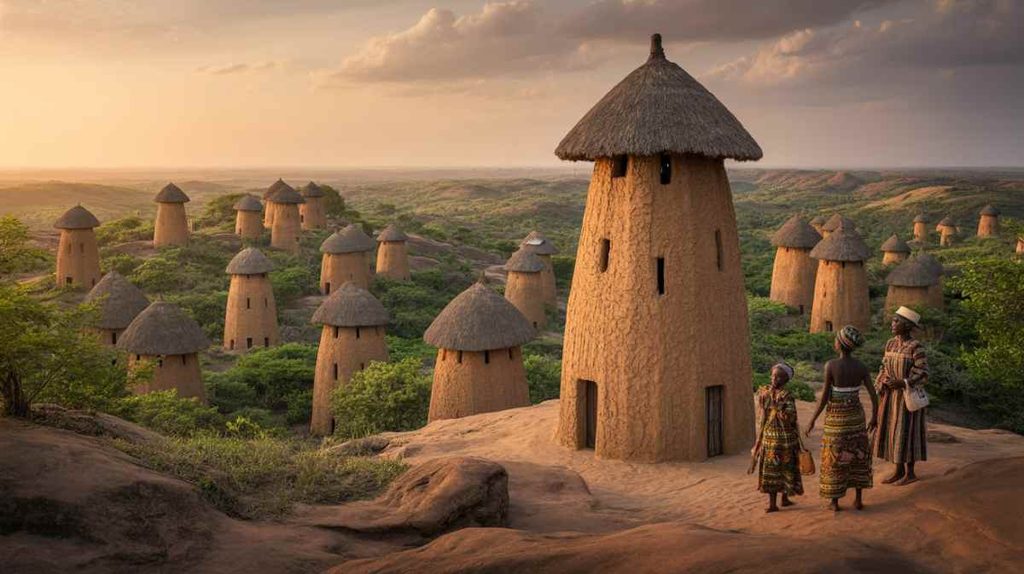
Benin tourism is expanding its cultural travel offer in the Atakora Department through Koutammakou, Boukoumbé and Natitingou, bringing UNESCO-recognised heritage, Tata Somba architecture, mountain landscapes and living cultural traditions into a wider national tourism network. The Beninese portion of Koutammakou was added to the UNESCO World Heritage List in 2023 as an extension of the transboundary Koutammakou property in Togo.
The extension covers 240,658 hectares in Benin and recognises a cultural landscape shaped by the Batammariba people. The area contains traditional Tata Somba houses, cultivated landscapes, natural features and cultural practices that remain part of community life.
Koutammakou Connects Heritage And Tourism
Koutammakou provides northern Benin with a major cultural tourism asset. UNESCO describes the landscape as a place where traditional settlements, agricultural practices, natural surroundings and architectural traditions are closely interconnected.
The Tata Somba structures are among the most recognisable features of the landscape. These fortified earthen houses, commonly known as Tata Somba, are designed around several levels and incorporate spaces for living, storage and livestock.
For visitors, the architecture provides an opportunity to explore traditional construction techniques and understand how buildings developed in response to local environmental and social conditions.
The landscape is therefore more than a collection of historic structures. It represents a living cultural environment where architecture, agriculture and community practices remain interconnected.
Boukoumbé Provides A Gateway To Tata Somba Culture
Boukoumbé is closely associated with Tata Somba architecture and the cultural landscape of Koutammakou. Located in the Atakora region, the town provides access to traditional settlements and surrounding mountain scenery.
Visitors travelling through Boukoumbé can encounter distinctive earthen structures distributed across the landscape, alongside agricultural areas and communities.
Cultural tourism in the area can include architectural visits, guided walks and opportunities to learn about local traditions. The setting also allows visitors to combine cultural sightseeing with outdoor exploration.
The development of tourism routes around Boukoumbé can connect the town with other attractions in Atakora rather than treating Koutammakou as an isolated excursion.
Natitingou Strengthens Northern Tourism Routes
Natitingou serves as an important tourism and transport centre for northern Benin. Its location provides access to the Atakora Mountains, Koutammakou and other attractions across the region.
The town also has cultural attractions of its own, including the Musée Régional de Natitingou, where visitors can learn about local history, traditions and material culture.
Natitingou can therefore function as a base for multi-day itineraries covering cultural, natural and community tourism.
Travellers can combine visits to museums and local heritage attractions with journeys towards Boukoumbé and the Koutammakou landscape.
Atakora Mountains Add Nature Tourism
The Atakora region is not limited to cultural tourism. Its mountainous terrain provides opportunities for hiking, landscape sightseeing and nature-based travel.
The Atakora Mountains form one of the most distinctive geographical environments in northern Benin. Valleys, hills and rocky landscapes provide a different experience from the country’s coastal and southern destinations.
Combining mountain tourism with cultural heritage gives visitors a broader itinerary. A journey can include traditional Tata Somba architecture, community experiences and hiking through the surrounding landscape.
This combination also supports longer stays by providing several tourism activities within the same region.
UNESCO Status Raises International Visibility
The inclusion of the Beninese section of Koutammakou on the UNESCO World Heritage List provides international recognition for the area’s cultural significance.
The World Heritage property is transboundary, extending across Benin and Togo. UNESCO notes that the landscape represents the cultural territory of the Batammariba and is recognised for its distinctive architecture and continuing traditions.
The designation also places conservation at the centre of tourism development. Any increase in visitor activity must operate alongside protection of traditional buildings, landscapes and cultural practices.
For Benin, the UNESCO status creates a prominent heritage attraction that can be integrated into broader national tourism routes.
Cultural Tourism Diversifies Benin Travel
Benin’s tourism offer includes coastal attractions, historical sites, wildlife areas and cultural destinations. The development of Atakora adds greater geographical diversity to this portfolio.
Southern Benin provides access to destinations around Cotonou, Ouidah and Porto-Novo, while northern regions offer different landscapes and cultural experiences.
Koutammakou strengthens this northern route through its combination of architecture, community heritage and natural scenery.
Visitors interested in West African cultural tourism can therefore incorporate Atakora into itineraries alongside Benin’s historic cities and other destinations.
Traditional Architecture Becomes A Tourism Asset
The Tata Somba structures provide one of the most distinctive architectural experiences available to visitors in Benin.
Their earthen construction and defensive design reflect the cultural history of the Batammariba people. UNESCO identifies the architecture as a defining element of the Koutammakou cultural landscape.
Tourism around these structures requires careful management because they remain part of a living environment. Preservation, community participation and responsible visitor behaviour are therefore important components of sustainable tourism development.
The architecture also provides opportunities for cultural interpretation, photography and educational travel.
Atakora Creates A Multi-Experience Itinerary
A tourism journey through Atakora can combine several travel categories within one regional circuit.
Visitors can begin in Natitingou, explore museums and local culture, continue towards Boukoumbé for Tata Somba architecture and then travel through the Koutammakou landscape.
Mountain landscapes and rural communities add further dimensions to the journey.
This combination can make Atakora particularly relevant to travellers seeking cultural and nature-based experiences rather than conventional city tourism.
Benin Tourism Development Tracker
2023: Benin’s Koutammakou extension was added to the UNESCO World Heritage List.
240,658 hectares: Area of the Beninese component of the World Heritage property.
Boukoumbé: Major gateway to Tata Somba architecture and Koutammakou.
Natitingou: Regional tourism centre and access point for Atakora attractions.
Atakora Mountains: Provide hiking, nature and landscape tourism opportunities.
Tata Somba: Traditional earthen architecture forms a central component of the cultural landscape.
FAQs
1. Where is Koutammakou in Benin?
The Beninese section is located in the Atakora Department in northern Benin, around the Boukoumbé area.
2. Why is Koutammakou important for tourism?
It combines UNESCO-recognised cultural heritage, Tata Somba architecture, natural landscapes and continuing cultural traditions.
3. What can travellers combine with Koutammakou?
Visitors can combine the site with Boukoumbé, Natitingou, Atakora mountain landscapes, museums and other northern Benin attractions.
Conclusion
Benin tourism is expanding its northern cultural travel offer through Koutammakou, Boukoumbé and Natitingou, creating a regional route that connects UNESCO heritage, Tata Somba architecture, mountain landscapes and living cultural traditions. The 2023 UNESCO World Heritage extension gives the Beninese section of Koutammakou international recognition, while Atakora provides the geographical setting for combining cultural and nature-based tourism. With Natitingou serving as a regional base and Boukoumbé providing access to the distinctive Tata Somba landscape, northern Benin is developing a more diverse heritage-focused travel experience.


